
As A Society, Why are We Obsessed With the ‘Crazy Girl’?
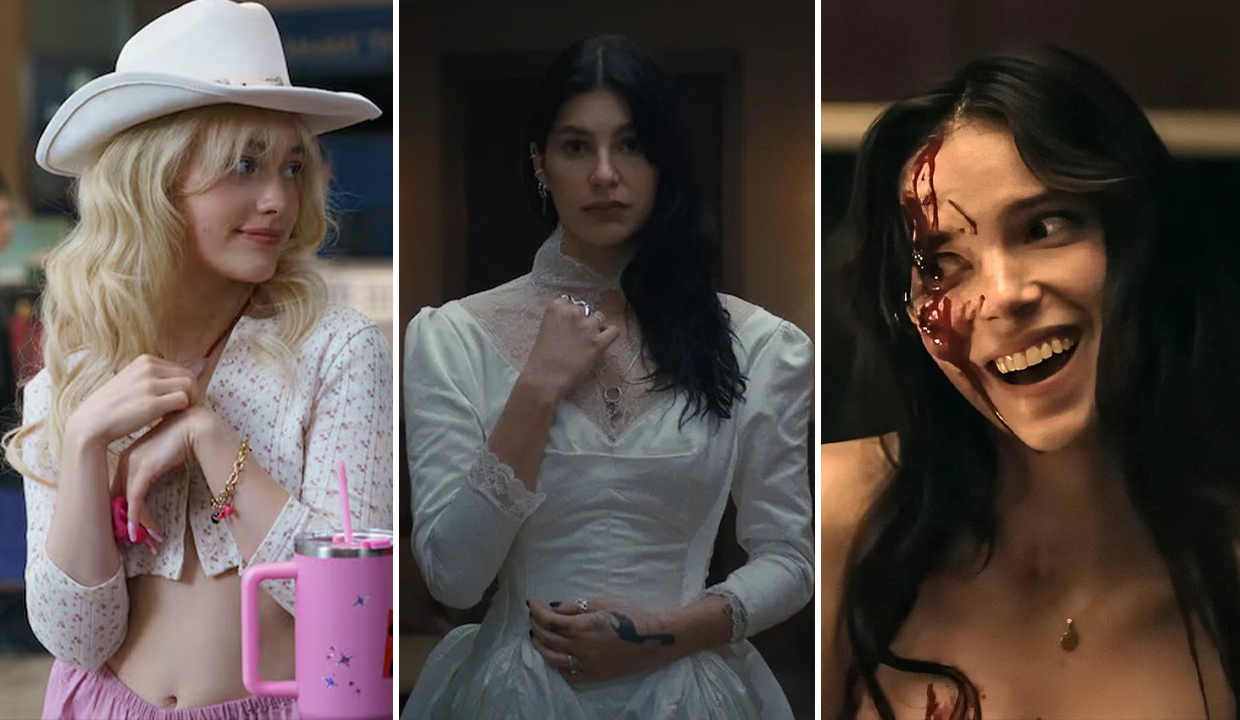
In Curry Barker’s new box-office hit, Obsession, we watch Nikki Freeman, played by Inde Navarrette, become, well, obsessed with her boyfriend, Bear, watching him sleep and responding to him with emotional outbursts as she behaves in increasingly concerning ways.
Meredith Alloway’s Forbidden Fruits presents the character Cherry, played by Victoria Pedretti, who comes across as the loyal best friend; she’s bubbly, devoted, and often underestimated, so much so that it comes as a real surprise to find out she’s a witch, devoted to the self-preservation of her coven. Her inner darkness defies her airhead blonde persona in ways no one expected.
In the Netflix series Something Very Bad Is Going to Happen, everyone brushes off manic pixie dream girl Rachel’s sense of dread that haunts her upcoming marriage. We soon find out that gaslighting is more damaging than speaking out.
These three releases are all the talk of the town, but what’s driving their popularity? In a few words, it’s the appeal of the ‘crazy girl’. But what is it about these characters that makes them so relatable?
A Brief History: The Crazy Girl Who Got Silenced
For years, women were expected to behave a certain way, fill societal roles as a homemaker and wife, and not act on certain emotions for fear of being seen as ‘crazy’. Occasionally, emotionally intense women were portrayed in films, but they were typically malevolent forces who were silenced or even killed. Everything was wrapped up in a neat little bow, so people didn’t have to worry that these women would ever get to a point where they could threaten their stereotypical ideals.
For example, in Rosemary’s Baby, Rosemary (Mia Farrow) finally uncovers the truth about her demon son but simply accepts her role as a mother. In Jane Eyre, Bertha Mason, the archetypal madwoman in the attic, is successfully contained, enabling the heroine’s happy ending. Now Voyager depicts Charlotte (Bette Davis) as a crazy, repressed shut-in who finally finds peace by falling in love with a man.
But today’s characters don’t have such neatly projected endings. They don’t accept their fate and let society silence them. Rather, their actions have real repercussions that go further than they ever did.
The Psychology Behind the Appeal
There’s something captivating about a woman coming undone. It’s not the pity we once felt from a weeping housewife. Today’s heroins are dangerous, electric, and impossible to ignore.
The average woman may not want to exactly be the crazy girl, but there’s a part of her that wants to break out of stereotypes that tell her to stay calm, be likable, and not be ‘too much.’ The crazy girl cranks that up to 11, and women are getting a voyeuristic thrill from watching. Seeing her break through the world without a filter is a cathartic release.
Then there’s the ‘crazy’ label. Women’s emotional responses are often seen as crazy, hysterical, or irrational, while the same behavior in a man could be labeled as passionate, intense, or driven. The injustice of the double standards is another reason why we want to root for the villain.
“Women are not labeled as crazy because they're irrational. They are labeled that way when their reality becomes inconvenient to others.”- Mission Momplex
The New Crazy Girl: She’s Not Crazy, She’s Responding
When comparing the classic crazy girl to today’s crazy girl, they have something in common. Everyone around them thinks they’re out of their minds. But in modern times, the audience knows better.
Take Nikki Freeman, for example. She’s so consumed by love that she becomes terrifying, jealous, even violent. But the viewer knows she never wanted any of it. Her boyfriend made a wish that rewired her emotionally.
Meanwhile, he’s seen as the nice guy while she’s the villain.
In Forbidden Fruits, Cherry’s played differently. On the surface, she embodies everything society approves of in a best friend. She’s sweet, loyal, agreeable, and is happy to take a back seat to the people she admires.
But beneath the surface, she’s built a coven, a sisterhood, and a power structure that lets her play outside the rules. Her darkness isn’t a flaw; it’s a response to a world that taught her to be palatable above all else.
And then there’s Rachel, possibly the most relatable of the three. She senses something is wrong the moment she arrives at her fiancé’s home and mentions it repeatedly. But instead of being believed, she’s dismissed, doubted, gaslit, and treated like she’s the problem.
The audience seems to be the only one that knows she’s in touch with reality, while everyone else thinks she’s crazy.
When the Crazy Girl Doesn’t Get Wrapped Up Neatly (Warning: Possible Spoiler Territory)
Today’s crazy girl also stands out because her endings don’t get wrapped into a neat little bow.
At the end of Obsession, Nikki is surrounded by the bodies of people she killed while she was under a spell she never asked for. She’s free of the spell, but not the damage it caused.
In Forbidden Fruits, Cherry’s coven collapses under the weight of its own toxicity. The sisterhood she devoted herself to, which was supposed to protect her, becomes the very thing that consumes her, revealing what happens when loyalty outlives those who deserve it.
Rachel’s ending may be the most devastating of all. When Nicky, Rachel’s fiancé, dismisses the curse and calls off the wedding, Rachel stops believing in the man who never believed her.
By the time he panics and tries to rush through the vows, watching his family suffer the consequences she warned him about, it’s too late. Her decision to stop believing in him renders her immortal, condemned to watch every wedding in Nicky’s bloodline forever.
These endings aren’t happy. Would we prefer for the crazy girl to defeat everyone who doubted or victimized her? Maybe.
But the point is to sit with the discomfort of what happened to her and ask ourselves who to blame.
Why The Crazy Girl Never Goes Out of Style
In movies and TV, the crazy girl has always been part of the narrative, but she’s evolved with the times. Instead of being stereotyped as unhinged or packaged into a cautionary tale, she’s responding to a world that wants to keep her contained.
As viewers, we watch, not because we want her to fall apart or even necessarily to become the hero in the tale. It’s because we see ourselves in her. And that relatability, that feeling of being recognized, makes us feel free.